

Embracing Chaos
Podcast & Accompanying Reflections

This week I had the pleasure of speaking with Lucas Vos on his podcast. Lucas and I have many shared points of reference, but I found him to be a remarkably open and genuine person and that’s what really allowed the conversation to flow easily. I’ve done a number of small podcasts in the past, but this one had the quality of being able to open up new possibilities and dig a little deeper. I’ve been thinking about some of the things we touched on all week. One of the themes that seemed to carry through was Chaos. More precisely, how to relate with chaos. What is our attitude towards death? What does it mean to let go? It’s an incredibly valuable thing to address personally, but it feels like something that has a stronger significance because of the chaos of the current cultural landscape. How we choose to confront the small chaos personally seems to have an echo all the way up and down while we watch Western civilization decay in real time.
One of the things that Lucas and I shared was losing the fear of death after having a psychedelic experience. It’s fairly common, and hard to describe if you haven’t had it. For me, the feeling of love and homecoming was so intense, I was completely sure that is where we return when we die, whatever that place was. It’s pretty easy to be unafraid of death after that. But I didn’t know how to arrange my life in accordance with that new reality, I was only 20, death was most likely far into the future. I might not be afraid of death, but I was still petrified of life. After a few weeks or possibly months of thinking I was somehow enlightened, the reality came crashing back. Anxiety, depression, existential crisis. Chaos, essentially, and trying to figure out what to do about it.
The psychedelic trip is a microcosm of dealing with overwhelming chaos. It’s good advice in that space to allow yourself to “let go.” Fighting the experience seems to make it worse, you just have to relax into the journey and let it run its course. It took years of steadily staring at those negative feelings to be able to get anywhere with them, but resisting never worked. The lesson of letting go didn’t just apply to LSD, it was a lesson in not fighting what you can’t control. Tying myself in knots and mental fussing didn’t actually help in sorting out anxieties, or anything else for that matter.
The easiest way to describe it is with a depression. I also used to think that depression was a personal ailment, that there was something wrong with me and I should push back against it. When people discuss depression they talk about diet, exercise, vitamins, chemical imbalance, whatever. As if depression is like a misfiring piece of equipment and if you tighten the bolts and screws you’ll start running normally again. I don’t think that way anymore. With some exceptions, depression looks more like the weather. Some days it rains. Sometimes there’s thunderstorms. Often it’s cloudy. You don’t fight the weather, you let it pass by, and its pointless to shake your fist at the sky for something as natural as rain. When you are forced to pull back from external life, from interests, from distractions, and be quiet the depression probably has information for you that needs to be seen. The trouble is letting go enough to allow the negative feelings to really have weight, and feeling it all the way. If you let them have weight, it might be that you have to change something to accommodate for them. The depression is those things you don’t know how to look at that have no other way of connecting with you other than dragging you down until you can’t ignore them anymore. That’s why it takes your old interests and your energy. It’s asking for attention, inwardly. You have to open yourself to chaos and falling apart. You have to be willing to die a little bit and be rearranged. It relativizes the potency of your role in your own life because it makes it clear that you’re not in the driver’s seat. You can’t even see the road. But after awhile you realize there’s something more intelligent and powerful than yourself at the wheel and it’s only slowing the process by trying to be a backseat driver.
There is the more personal aspect to allowing something new into your sphere of consciousness. In the hero’s journey cycle it aligns with going into the underworld and fetching the treasure. The dragon is the overwhelming negative feelings or experiences and the cracks that can open up in your identity. It devours you, or you endure the inner conflict and hopefully emerge victorious.
There is also a less personal dimension to that underworld journey. There are entire worldviews and cultural identities that seem to be dying, or at least transforming. They inform us about what and who we are at a more fundamental level, and it’s been baked into the system so thoroughly that it’s not necessarily conscious. They live in us as the inhabitants of the Western world. If you’ve watched Jordan Peterson’s Maps of Meaning lectures, or the Genesis Biblical lectures, you may remember a description of concentric walls, like a city, that keep chaos as bay. The outer walls contain axioms that the whole civilization is built on. When they begin to crack, and the chaos enters the city, it’s not exactly a personal experience, but it is extremely disorienting. It’s a depression on steroids, in a way, because you have even less firm ground to stand on. A collective depression, that you encounter personally. What most people seem to be doing is doubling down on their current beliefs because they can’t weather the chaos that is incoming. Another option is reverting back to some previous state of human consciousness, like nature worship or tribalism, which is generally totally amoral by our inherited Christian standards. I’m not covering new ground, this is Jordan Peterson / Jonathan Pageau / Carl Jung 101.
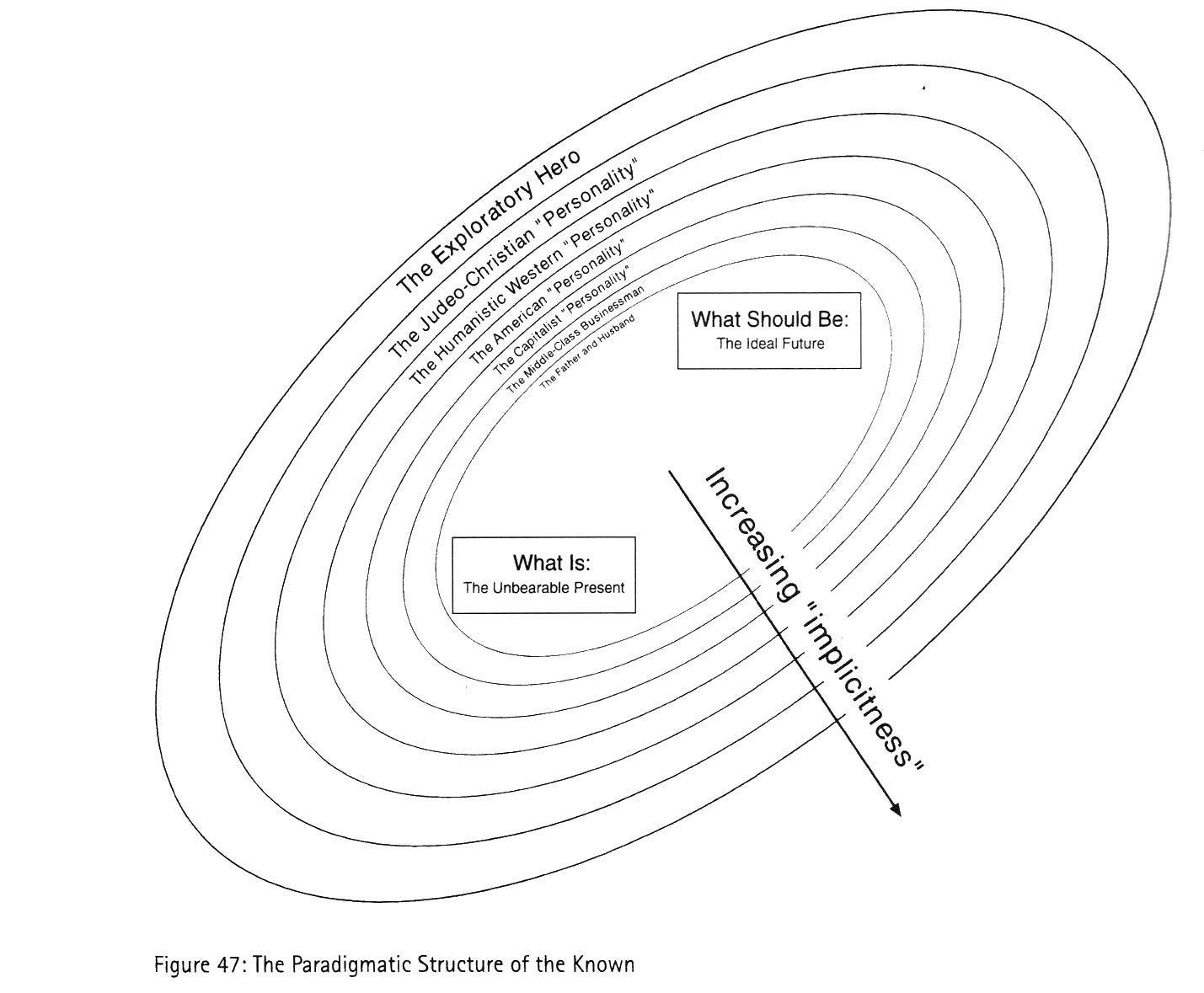
The actual experience of it is not quite like listening to an online lecture, though. I also don’t think that the solution is trying to rebuild the walls with increasingly intellectual arguments. That’s all I see the Defenders of the West gang doing, not that they don’t have some good points. But something else seems to be asking for attention. You can’t force something to keep functioning that is no longer functioning, not with debate and intellectualism. How long can the increased polarization go on? The current line of approach hasn’t been working, because it’s all embedded in the old system. After all, when an organism wants to die, it’s freakish to extend its suffering on life support for too long. Some times it’s the proper reaction to pull back, and let go.
We have a culture that has lost touch with its roots and the fundamental human experience. We hold nothing sacred. We have no shared idea of what those things mean, it’s gone cold in us. It’s better to accept death as a natural part of life rather than fighting tooth and nail to avoid it. There is no rebirth, no resurrection, no new life until the old body dies. It’s that simple. We are getting in the way of the new future unfolding by resisting, by refusing to surrender. Maybe it’s because we no longer trust in anything beyond ourselves, no higher order of meaning. It’s possible, though, that this process isn’t personal and we should relate to it accordingly. Whatever wants to come next probably won’t look like what came before, a new city with new walls emerging. As they say, the only way out is through, and it involves swimming in immense chaos in the meantime.
Thanks Zhil:)
This was beautiful, Emilee. I read it to my wife, we both though the bit about depression was masterful. And thank you for the kind words, I view our conversation as a new start. You brought my thinking a little box of contained chaos so that things can flow again. I have much to learn from you and I am a big fan. Until next time!